Before today’s CPI number lands and traders start moving billions, let us step back from the screens for a moment and look at what gold has actually done through every major crisis of the past fifty years.
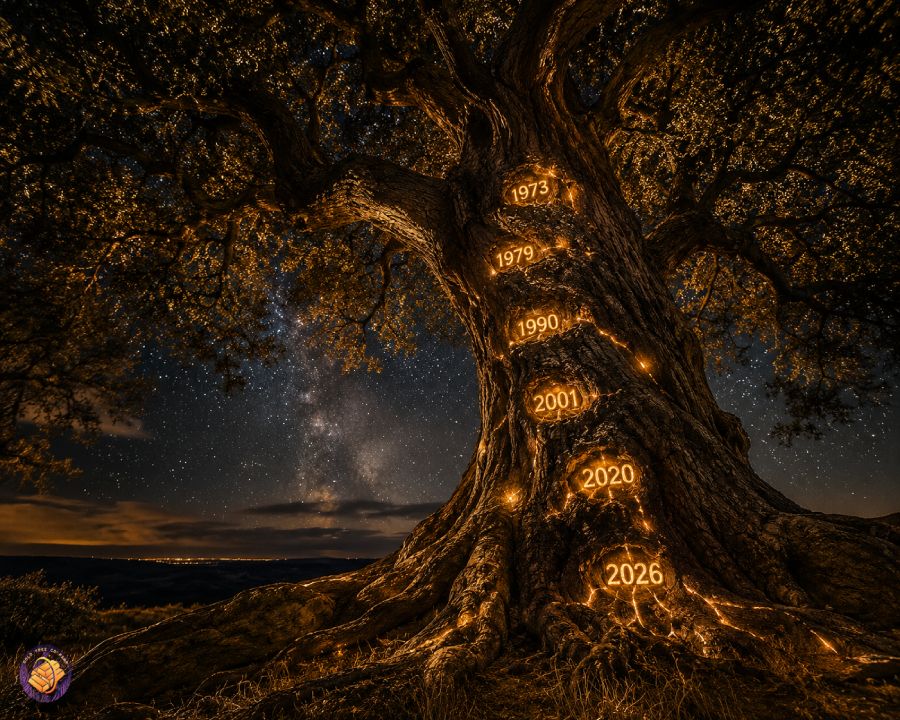
In 1973, the Arab oil embargo cut off 5% of global oil supply and sent prices quadrupling. Gold rose from $65 to over $195 per ounce in two years. In 1979, the Iranian revolution and the Soviet invasion of Afghanistan created what the world called the “perfect storm” for gold. The metal exploded from $225 to $850 in eighteen months. In 1990, Iraq invaded Kuwait and oil spiked 170% in four months. Gold initially fell on inflation fears — then recovered fully within a year. In 2001, the September 11 attacks sent gold briefly lower on dollar strength — then began a decade-long bull run from $270 to $1,920. In 2020, the pandemic froze the global economy and gold hit $2,075, then its record high at the time.
The pattern in every case is the same. Crisis hits. Gold initially reacts to short-term mechanics — dollar strength, rate fears, panic selling. Then the structural reality reasserts itself. Gold, the only asset that has no counterparty, no government backing, and no default risk, resumes its role.
The Hormuz crisis of 2026 is following an identical playbook. Since the war began in late February, gold has fallen roughly 12% from its January all-time high of $5,595. The mechanism is textbook: high oil → high inflation → rate hike fears → strong dollar → lower gold. This is not a structural break. It is a temporary distortion caused by an energy shock. History says the distortion resolves. History also says the buyers who entered during the distortion — during the 1990 Gulf War dip, during the 2001 post-September dip, during the 2008 financial crisis dip — were the ones who captured the most extraordinary subsequent gains.
Today, Tuesday May 12, the April CPI number lands at 8:30 AM Eastern. Gold is at $4,750 — up from Monday’s low of $4,670 after Trump rejected Iran’s peace proposal as “totally unacceptable.” The number today matters. The war matters. The Federal Reserve matters. But the fifty-year story of gold tells you something the daily chart cannot: the tree is still growing.