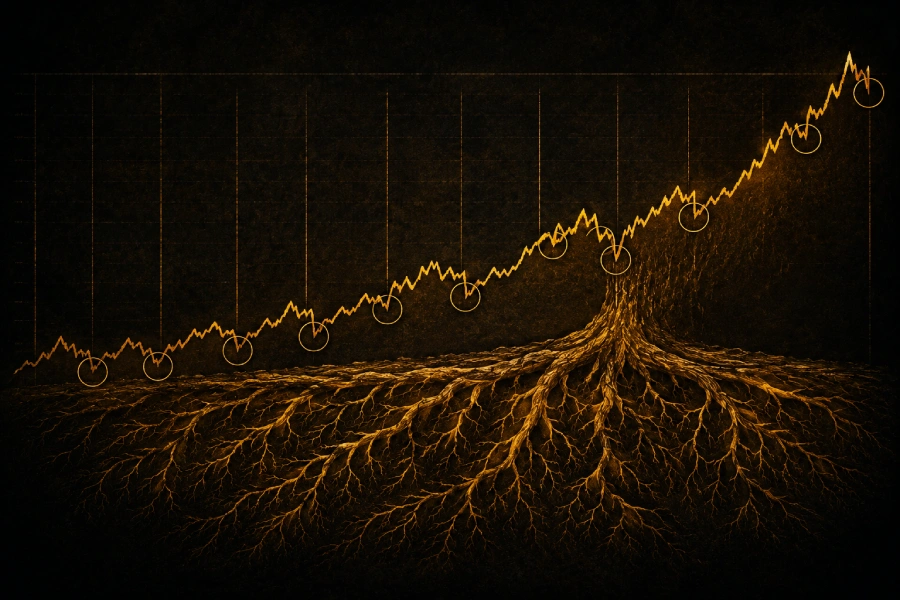
Today gold did something it has not done since November 2025: it fell below $4,000 per ounce, trading near $3,988 after a drop of more than 3%. For anyone holding gold, this is a difficult day, and it deserves an honest response rather than false comfort. The decline is real, it is steep, and the forces behind it are genuine. But the long view — the perspective that matters most for anyone who holds gold as a long-term store of value — tells a story that a single brutal session cannot erase. Even after breaking $4,000, gold is still 20% higher than it was one year ago.
Let us be honest about the storm first. Gold has now fallen about 12% over the past month and roughly 20% from its January record of $5,589. The cause is a powerful shift in monetary policy expectations. The Federal Reserve, under new Chair Kevin Warsh, has turned firmly hawkish. Markets now price a 68% chance of a September rate hike, up from 29% a week ago, and major banks like Bank of America expect three hikes this year. The dollar has broken above 100 to its highest since May 2025. On top of this, the easing of the Iran war has removed gold’s safe-haven premium, and a selloff in tech stocks forced investors to sell gold to cover losses. Three pressures, arriving together, broke a key level. That is the honest picture.
Now the roots. The reason gold is still up 20% over the past year, despite this month’s decline, is the structural foundation that no rate decision can touch. Central banks continue to accumulate gold as a strategic reserve — they turned net buyers again in April, and roughly 45% plan to increase their reserves over the coming year. Global gold demand reached a record 1,231 tonnes in the first quarter of 2026. Mine supply grows at just 1% to 2% per year, unable to meet rising long-term demand. The near-$39 trillion US debt and the global shift away from dollar dependence continue to drive official buying. These forces built gold’s rise over years, and they have not reversed — they have simply been overwhelmed, temporarily, by the monetary headwind.
History offers perspective here. The dollar’s break above 100 has happened before. Every sustained break above that level since 2000 that came alongside high rate expectations ultimately mean-reverted — and each reversal created an extended period of above-average returns for those who held gold through the difficult stretch. The tree has weathered breaks of major levels before. In 2015, gold fell to around $1,050 amid near-universal pessimism, then began the climb that carried it to $5,589. The hardest days, in hindsight, were often the best days to hold.
A patient gardener does not uproot the tree because of one harsh storm. Gold at $3,988 is painful for anyone watching the screen today. But the roots — central bank demand, scarce supply, eroding confidence in paper money — remain deep and undamaged. They are why gold is still up 20% over the year, and they are why the long-term direction they point toward has not changed.