Something unusual is happening in how gold is being discussed right now. With the metal sitting near $4,524 — down from January’s all-time high of $5,595, pressured by rate hike fears and Iran peace deal complications — the narrative around gold has shifted to doubt. The same asset that was celebrated at $5,595 three months ago is now being questioned at $4,524. And for long-term buyers who understand history, that shift in narrative is a signal, not a warning.
The facts have not changed. Gold is 34.7% higher than it was one year ago. That is a better return than any major stock index delivered over the same period. The structural demand that drove gold to $5,595 in January — central bank buying at historic rates, mine supply growing at just 1–2% annually, sovereign debt concerns across Western economies, geopolitical fragmentation accelerating — none of these have reversed. What has changed is one specific temporary mechanism: the Hormuz oil shock is feeding inflation, which is keeping the Federal Reserve from cutting rates, which is keeping the dollar elevated, which is mechanically suppressing gold’s price in the short term.
This week added two more complications. The FOMC minutes on Wednesday confirmed Fed officials discussed the conditions for a rate hike — the most hawkish signal from the Fed this cycle. And Iran’s Supreme Leader issued a directive that enriched uranium cannot leave the country, directly blocking the US minimum requirement for a peace deal. Oil jumped back above $106 on the Iran news. The market has now priced in a meaningful probability of a Fed rate hike by December 2026.
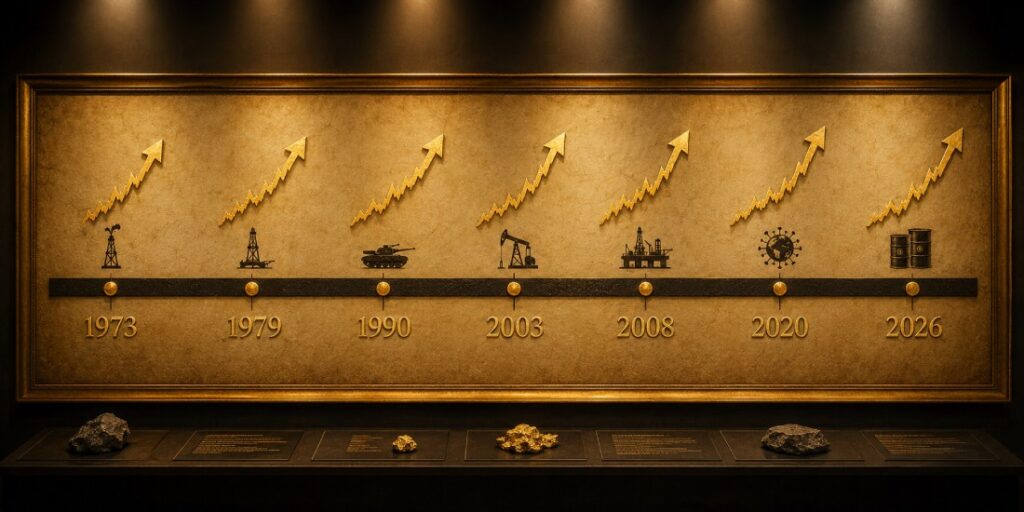
These are real headwinds. They are also both tied to the same single cause: the Hormuz closure. The Strait has been effectively shut for 84 days. In every historical energy crisis, the average duration of a supply disruption before political or market forces resolve it has been measured in months, not years. The 1973 Arab oil embargo lasted five months. The 1979 Iranian revolution disruption lasted approximately 18 months before markets adapted. The 1990 Gulf War oil shock lasted four months. Each one ended. Each time gold, which had absorbed the short-term mechanics of the shock, subsequently resumed its structural uptrend with force.
The tree bends in the storm. Today’s storm has a name, a cause, and a known resolution mechanism. The roots have not moved.