Two numbers define gold’s situation this Saturday May 16. The first is 4% — the weekly loss that took gold from $4,720 last Friday to $4,539 today, driven by the hottest US inflation data in years and the strongest dollar since the war began. The second is 41.7% — the year-on-year gain that means gold, despite everything this week, is still nearly $1,350 per ounce more valuable than it was this time in 2025. Both numbers are true. But for anyone thinking beyond the next 48 hours, only one of them matters.
The 4% weekly loss is fully explainable by short-term mechanics. April CPI came in at 3.8%, the highest since May 2023. April PPI surged at the fastest pace since 2022. The Empire State Manufacturing index for May jumped to 19.5, far above the 7.3 consensus, suggesting the economy is absorbing the oil shock better than feared. Each of these data points reduced the probability of Federal Reserve rate cuts and increased the probability of hikes. That directly suppressed gold. Add India’s 15% gold tariff hike and you have four separate negative catalysts landing in five days. The arithmetic is brutal and mechanical.
The 41.7% year-on-year gain is explainable by something entirely different: the structural and permanent shift in gold’s role in the global financial system. Central banks have been buying approximately 1,000 tonnes per year since 2022 — five times the rate of the prior decade. The US debt is running at 6–7% of GDP at full employment with $1 trillion in annual interest expense. Moody’s downgraded US sovereign debt in May 2025, making it the third major agency to do so. Gold has formally been recognised as the world’s second-largest reserve asset after the US dollar. These forces do not move weekly. They move over years and decades. They are the roots of the tree.
Now this weekend adds one more piece. The Trump-Xi summit concluded with a joint statement that Hormuz must remain open and China opposes its militarisation. Chinese vessels have begun passing through the Strait. Xi told Trump he would not supply Iran with military equipment and offered to help broker a deal. This is a meaningful shift in the diplomatic architecture around the Hormuz war. It does not end the war. But it changes the trajectory.
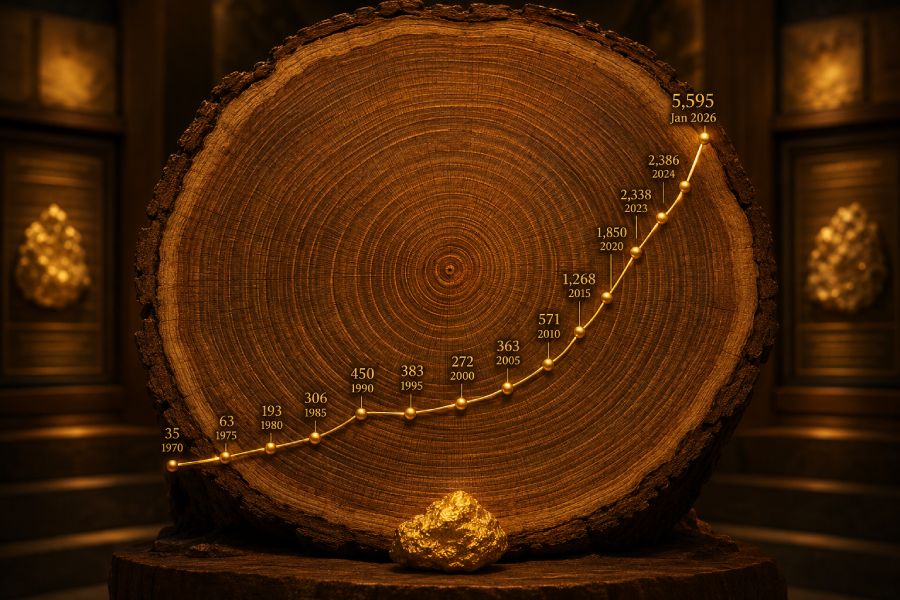
Gold at $4,539 is 18.9% below January’s all-time high of $5,595. Goldman Sachs targets $5,400 by year-end. The tree has seen harder storms. The roots have not moved.