After one of the harshest stretches in its long bull market, gold has finally strung together a winning week. Last week the metal rose about 2% — its first weekly gain since late May, ending four consecutive weeks of decline — and this Monday July 6 it is holding those gains near $4,150 per ounce. For anyone who held gold through the difficult spring, this is a moment of quiet vindication. And beneath
the headline recovery lies a deeper strength that the daily price movements do not fully capture. Let us look at both.
The visible recovery came from a shift in the Federal Reserve outlook. A weak US jobs report — just 57,000 jobs added in June against a 110,000 forecast — told markets the economy is cooling, which reduced the chance of Fed rate hikes. The probability of a September hike fell from 66% to around 50%. The dollar had its worst week since April. Gold, freed from the weight of rate-hike fears, rose. This is the story the headlines told, and it is real.
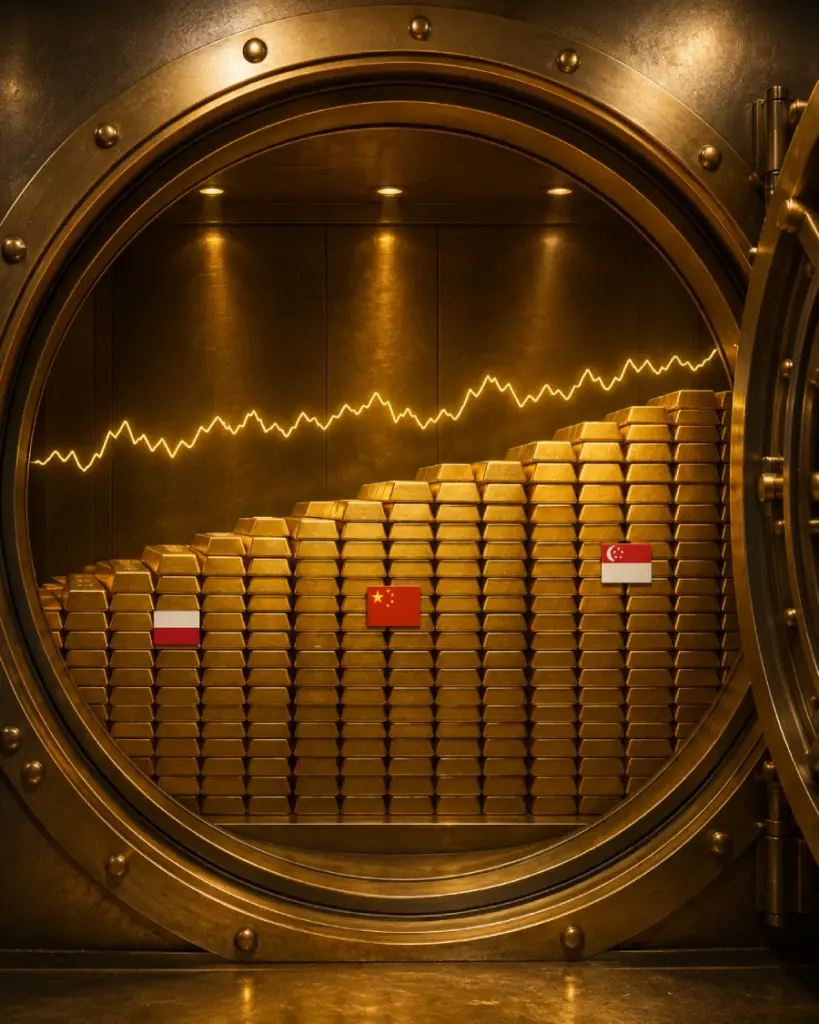
But the deeper strength is in something quieter, something that continued steadily throughout the entire four-week decline and is now building the foundation for the next phase. That something is central bank buying. In May, the world’s central banks added a net 41 tonnes of gold to their reserves — the second-highest monthly total of the year. Poland led with 18 tonnes, China added 10, and Singapore made its first net purchase since September 2025. For the full year 2026, sovereign gold purchases are projected to reach around 850 tonnes
— nearly double the average annual pace before 2022. While the price was falling and sentiment was gloomy, these institutions were quietly buying every dip. As one market report put it, central banks absorbing the recent drawdown was “the institutional equivalent of buying every sale.”
This is the pattern that defines every durable gold bull market. The price moves up and down on short-term forces — jobs reports, Fed expectations, the dollar. But underneath, the structural buyers accumulate steadily, building an ever-higher floor. The consolidation near $4,150 today is not stagnation; it marks the higher structural floor on which the next accumulation cycle is being built. The roots grow deeper even when the visible tree is not growing taller.
For the patient holder, this is the lesson worth internalizing. Gold fell for four weeks, then rose in one — but the central banks bought throughout, unmoved by the short-term noise. They buy gold not for next week’s price but for its role as a lasting store of value in an uncertain world. Their conviction is the deepest root of all. Gold at $4,150 is up 24.4% over the past year, oil has calmed near $70, and the Strait of Hormuz continues to recover. The storm of spring has passed; the tree is steadying, and its roots — central bank demand, scarce supply, the enduring role of gold — have never been stronger. This week’s Fed minutes on Wednesday may cause some short-term movement, but the quiet strength beneath the price does not depend on them.