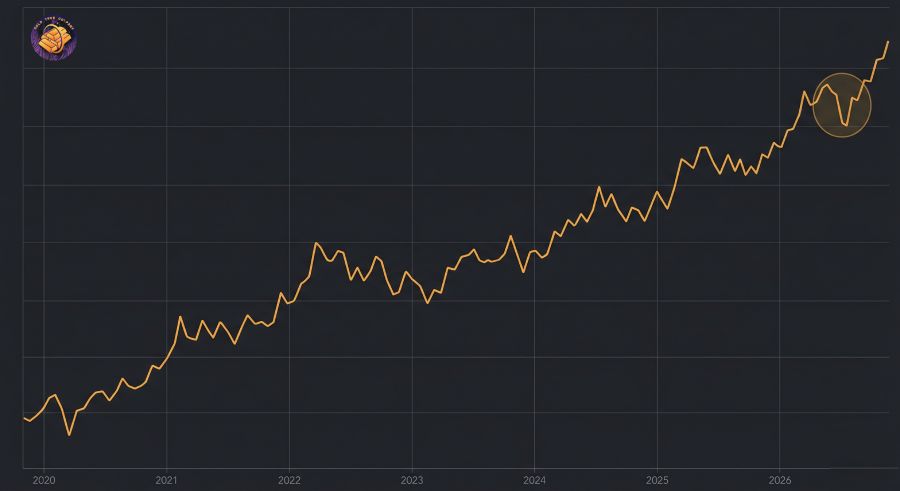
Gold fell for a third consecutive session on Friday April 25, ending a week that saw the metal shed roughly 3% as the Strait of Hormuz conflict escalated sharply. Since the Iran war began in late February, gold has actually declined approximately 10% — a figure that surprises many who expect war to automatically mean rising gold. Understanding why this is happening is essential for any buyer or investor right now.
The core issue is the oil-inflation trap. The Hormuz closure has created what the International Energy Agency this week called “the biggest energy security threat in history.” Oil near $90–$98 a barrel raises the cost of almost everything — food, transport, manufacturing. That is inflation. And inflation forces central banks to keep interest rates higher for longer. The Federal Reserve, meeting April 28–29, is almost certain to hold rates at 3.50%–3.75%. More critically, rising energy inflation may push the timing of any rate cuts further into the future. That environment — high rates, strong dollar — creates headwinds for gold.
But zoom out and the picture changes completely. Gold is still up more than 25% since early 2025. Mine supply is growing at just 1–2% a year. Central banks bought an average of 585 tonnes per quarter through 2025–2026. The all-time high of $5,595 was reached just three months ago. The current sub-$4,700 level is not a structural reversal — it is a war-driven distortion caused by a specific, temporary mechanism: oil prices pushing inflation expectations higher. When the Hormuz situation resolves — and it will — that oil-inflation pressure lifts, rate cut expectations return, and gold’s structural tailwinds reassert themselves powerfully.